You’ve found the accent. Now make it your character’s voice

Your scene partner slides a box under the table. Your line is “What’s in the metal box?” You’ve spent all morning practising the American T in “metal”. Now you have to get an answer out of someone who’s hiding something.
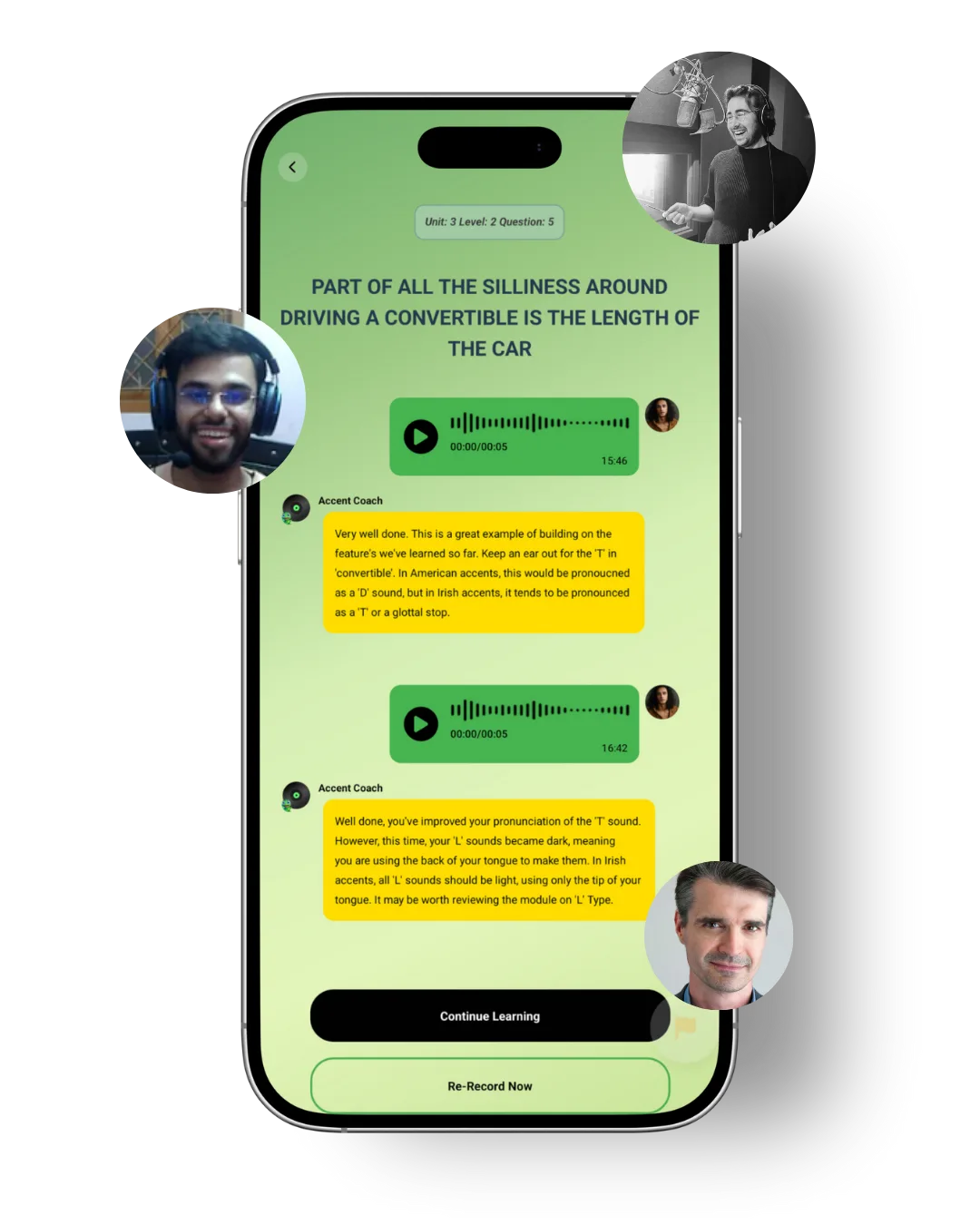
Try it with the two recordings below. Borrow one sound from Beau Thomas, Accentify’s accent coach, then give the line to a scene partner and see what happens when their answer changes.
If you need a voice for a particular role, choose a reference that fits the character first. You can run this exercise with a word from that recording and a line from your own script.
Give the reference and the script different jobs
On the page, underline “metal”. Beside it, jot down what you heard in Beau’s recording. In the margin, write what you want from your partner: “Get them to open the box.” Those are two different notes you can use on different takes.
The Royal Conservatoire of Scotland’s MEDEA listening guide suggests working with individual sounds and listening to freer speech for rhythm and tune. Try saying just “metal” once. Then put the box on a table between you and ask the whole question without stopping to correct yourself.
Try a line with something at stake
Give your reader this short exchange. Only the cue changes between takes.
Reader: “It’s a birthday present.”
You: “What’s in the metal box?”
For the first take, you’re hoping the present is for you. For the second, ask your reader to hide the box and say “Promise you won’t open it.” Keep your line exactly the same. This time, get them to hand it over.
| Rehearsal note | What to try |
|---|---|
| Sound to borrow | The quick middle sound in Beau’s “metal”. |
| Words to keep | “What’s in the metal box?” on both takes. |
| First cue | “It’s a birthday present.” Find out whether it’s yours. |
| Second cue | “Promise you won’t open it.” Get the box into your hands. |
| Listen back | Did “metal” still sound like the model once you wanted an answer? |
On playback, find the moment your partner hid the box. Did you wait before asking? Did “box” get more weight? Listen once for the exchange, then again for the sound in “metal”. If you lost it, replay Beau’s first clip and try just that moment with your reader.
Keep the speaker’s habits in perspective
Your reference speaker might laugh before answering a question. That laugh tells you something about the interview you’re watching. Whether your character would laugh as someone hides the box is a decision you can make in the room.
When you’re unsure whether a habit belongs to the individual or turns up more widely, listen to another documented speaker from the same area. Keep the original link and timestamp with your script so you can compare the same passages later.
If you’re using the International Dialects of English Archive, its copyright guidance explains how to use a recording for personal research and when you need permission to share the audio.
Let the next cue change something
Ask your reader to pick either cue without telling you which. If you hear the promise and catch yourself doing your birthday-present take anyway, give yourself another go. The accent has to survive the surprise as well.
For feedback from a coach, bring them the source clip and the take where the sound slipped. “Can we listen to my T in ‘metal’ after they hide the box?” gives them an exact moment to work on.
Start the General American lesson